


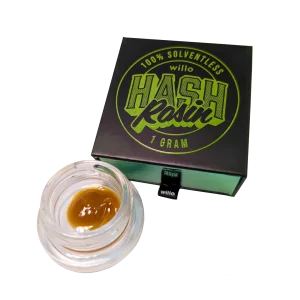
Lebanese hash is pressed resin, dry-sifted off the plant the traditional way. It smokes soft, spicy and earthy, the way the style has for generations.
Sold by weight, from an eighth to an ounce, under Private Label.
How to smoke hash
Warm a small piece between your fingers until it softens, then crumble it. Cold hash fights you. Warm hash breaks apart like clay.
- Joint: crumble a line of it along the flower before rolling.
- Bowl: drop a small piece on top of a packed bowl and light the edge.
- Pipe: the old-country method, smoked on its own with a slow flame.
- Pacing: start with a piece the size of a match head and wait.
Hash burns slower than flower, so a low flame and a gentle draw get more out of it than a hard pull.
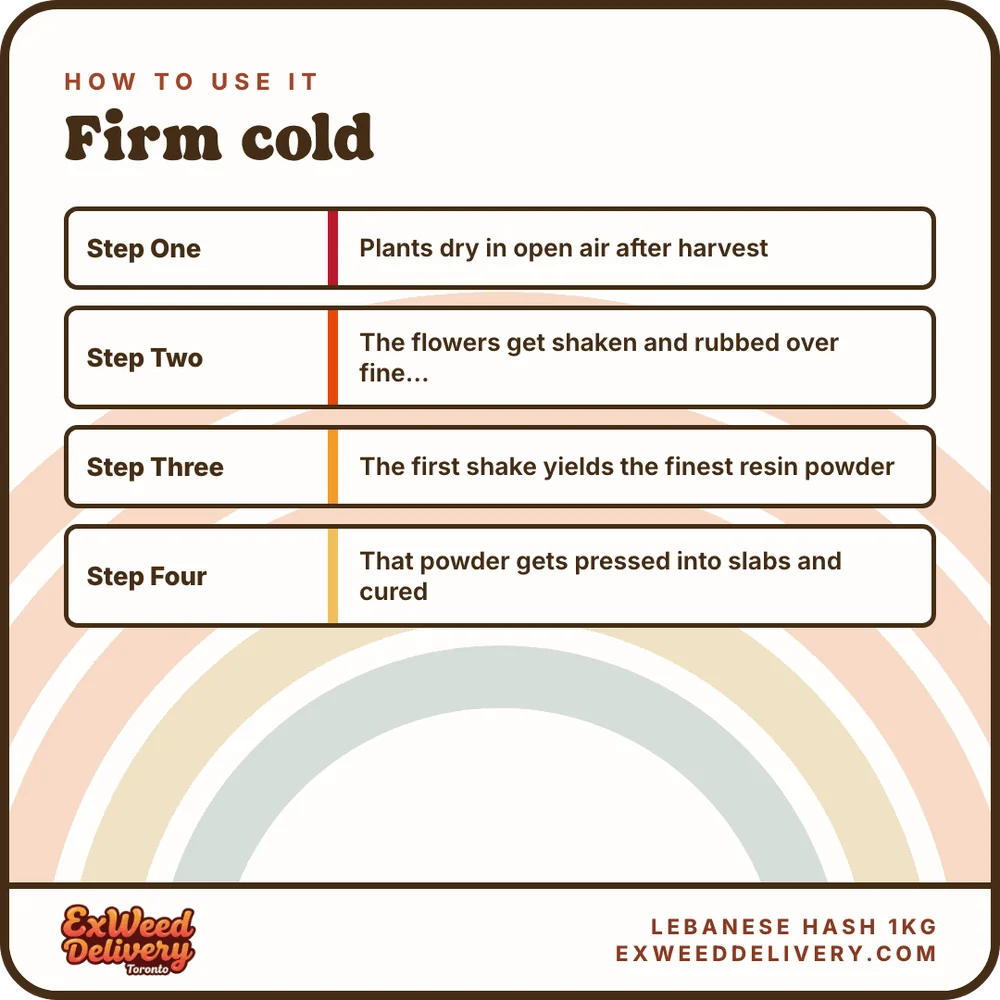
How traditional Lebanese hash gets made
- Step one: plants dry in open air after harvest.
- Step two: the flowers get shaken and rubbed over fine silk screens.
- Step three: the first shake yields the finest resin powder, known as kief.
- Step four: that powder gets pressed into slabs and cured.
No solvent touches any of it. Hash makers call this a dry sift, and the screens do what ice water does in a modern wash.
Red vs blonde Lebanese hash
Two names follow this hash everywhere. Sensi Seeds lists Lebanese Red and Lebanese Blonde as the two varieties smokers ask for by name.
As hash makers tell it, the split starts in the field and finishes in storage.
- Blonde: harvested earlier, before the plants reach full maturity. Lighter in colour, softer in smoke.
- Red: harvested at full maturity, then cured and aged for longer. Sunlight and air darken the resin over time.
- The chemistry: as red hash ages, THC slowly shifts toward CBN, a mellower cannabinoid.
- The result: red reads heavier and rounder, blonde reads brighter.
This hash ships without a red or blonde grade printed on it, so we won’t stamp one on. What we hand you is what our own copy describes: soft, spicy, and easy-going in the smoke.
Lebanon's place in hash history
The scale of it surprises people. During the civil war years, from 1975 to 1990, Lebanese hashish made up about 80% of global supply, per Al Jazeera’s reporting on the trade.
The legal picture moved much later. In April 2020, Lebanon’s parliament legalized cannabis farming for medical and industrial use, the first Arab country to take that step.
What's in this hash
- Sizes: 3.5g, 7g, 14g and 28g, cut to order.
- Style: traditional Lebanese, dry-sifted and pressed.
- Texture: firm cold, soft and crumbly once warmed.
- Flavour: earthy and spicy, smooth on the exhale.
- Onset: within minutes.
- Duration: 1-3 hours.
- Uses: joints, bowls, pipes.
- Format: pressed hash, limited stock.
Hash vs weed
Weed is the dried flower. Hash is the resin taken off that flower and pressed together, so it packs more punch into less weight.
The smoke reads different, too. Hash comes across spicy and round where dried flower tastes green and bright. Old smokers tend to say hash is heavier on the body.
Who this hash suits
Smokers who want the traditional article rather than a modern press. An eighth is the honest first buy, and the ounce is there once you have decided. Dabbers get more from a gram of rosin.
Our take on this hash
We like this hash for what it does to a plain joint. A crumbled line turns an ordinary roll slow and spicy, and the room smells like an old hash bar within a minute.
One honest limit: there's no lab sheet and no farm name on hash pressed this way, so we publish no percentage and no grade. What we can vouch for is the texture and the smell, which match the style exactly.
Storing hash
- Wrap it airtight and keep it cool and dark.
- Cut what you need and reseal the rest.
- Skip the fridge. Damp air is the enemy of pressed hash.
- Keep it locked away from kids and pets.
Private Label, the name on the hash
Private Label is the name our own line ships under. We found no public company page for it that stood up, so no story about the brand goes on this page.
What the catalog supports is short and true: pressed Lebanese-style hash, sold beside two grades of Delta-9 distillate under the same label.
EX Weed Delivery moves it across Toronto inside two hours. Every order carries a $50 minimum, delivery costs nothing above $70, and buyers are checked at 19+.
How this Lebanese hash compares on our shelf
Hash sits at one end of our hash and extract shelf, with the modern presses at the other. Here’s the map.
| Product | Potency | Format | Who it suits |
|---|---|---|---|
| Lebanese Hash (this hash) | Not printed on this batch | Pressed hash, 3.5g to 28g | Smokers who want the traditional article. |
| Solventless Hash Rosin 1g | Not printed on this batch | Pressed rosin, 1g | The modern solventless take, made for dabbing. |
| Live Resin 1g | 60-70% THC | Saucy extract, 1g | Dabbers who want a printed number and loud taste. |
| THC Shatter 1g | Not printed on this batch | Glassy sheet, 1g | Tidy single grams for a rig or a joint. |
| Moonrock pre-roll 1g | About 55-60% THC | Rolled joint | Anyone who wants strength with nothing to prepare. |
Rosin is the closest cousin here. Both start as resin sifted off the plant, and only the rosin gets pressed until it runs.
Common questions
What is Lebanese hash?
Lebanese hash is hashish made in Lebanon by sifting resin off dried cannabis, then pressing it into slabs. The Bekaa Valley in the east is the traditional heartland, where families have farmed the crop for generations.
What's the difference between red and blonde Lebanese hash?
Harvest timing and age. Blonde comes from an earlier harvest, before full maturity. Red is picked at full maturity and aged longer, so light and air darken the resin and THC slowly shifts toward CBN.
How do you smoke hash?
Warm a small piece until it softens, crumble it, then add it to a joint or lay it on a packed bowl. A pipe works on its own. Start with a match-head piece and wait a few minutes.
Is hash stronger than weed?
By weight, yes. Hash is the pressed resin of the plant, so the active part is concentrated into a smaller lump. Dried flower carries far more plant material for the same gram.
How should I store hash?
Airtight, cool and dark, with the bulk left sealed and only working pieces cut off. Damp is the real risk, so keep it out of the fridge and well away from kids and pets.
Reviews
There are no reviews yet.